

Apartments in Panathur, Bangalore – A Guide to Gated Community...
Read MoreCarpet Area vs Super Built-Up Area: Key Differences Every Homebuyer Should Know
Introduction
Buying an apartment is exciting, but understanding exactly how much space you are paying for can be surprisingly confusing. You might visit two apartments advertised as 1,500 sq. ft., only to discover that one feels noticeably more spacious than the other.
Why does this happen?
The answer often comes down to how the property area is measured.
Understanding carpet area vs super built-up area is essential when comparing apartments, evaluating property prices and deciding whether a home provides enough space for your family.
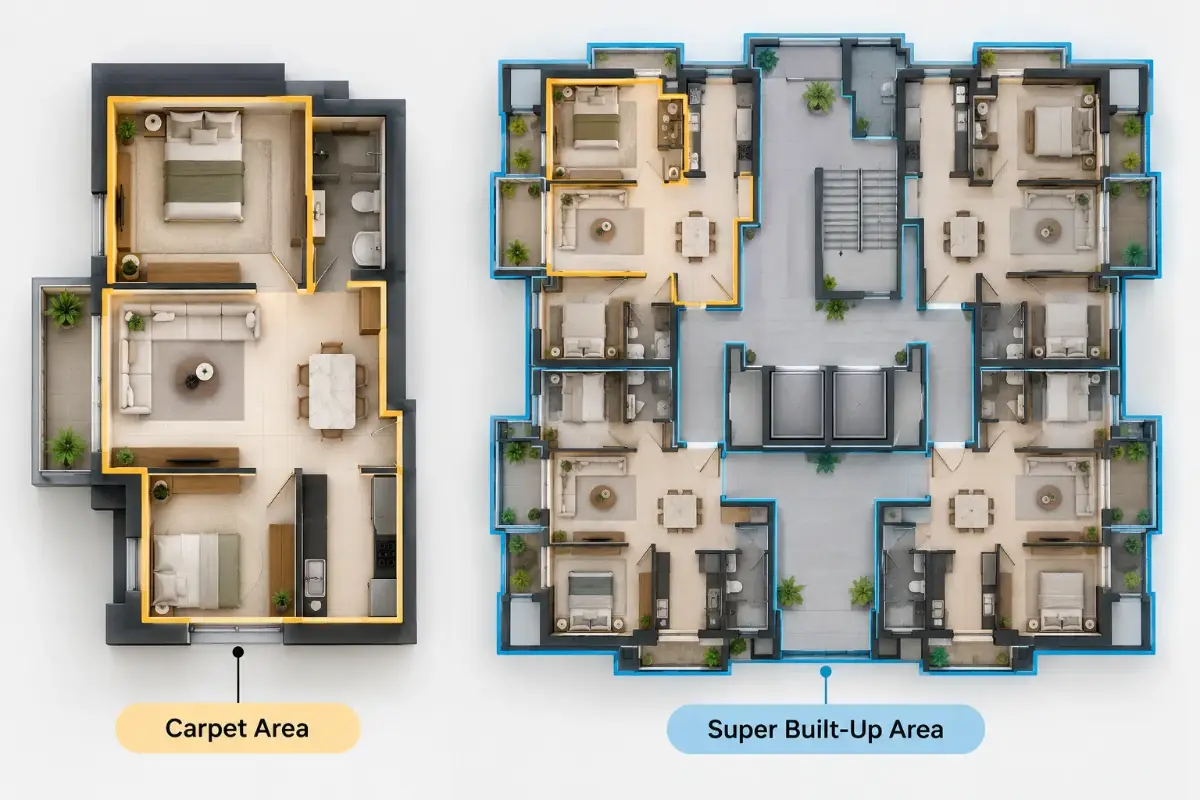
Carpet area represents the usable floor area of your apartment as defined under RERA, while super built-up area typically includes the apartment’s built-up area plus an allocated share of common spaces.
This guide explains both measurements in simple language, walks you through an apartment carpet area calculation, and shows how to compare apartment sizes before making a purchase decision.
What Is the Difference Between Carpet Area and Super Built-Up Area?
Quick Answer: Carpet area is the net usable floor area of an apartment, including internal partition walls but excluding external walls, service shafts, exclusive balconies and open terraces under RERA. Super built-up area is a broader marketing measurement that generally includes the built-up area and an allocated share of common spaces such as lobbies, corridors and staircases.
For homebuyers, carpet area is usually the more useful figure for understanding the space available within an apartment.
Super built-up area can help explain how a developer has represented the total marketed area, but buyers should always ask for a breakdown rather than assuming every square foot belongs to their individual home.
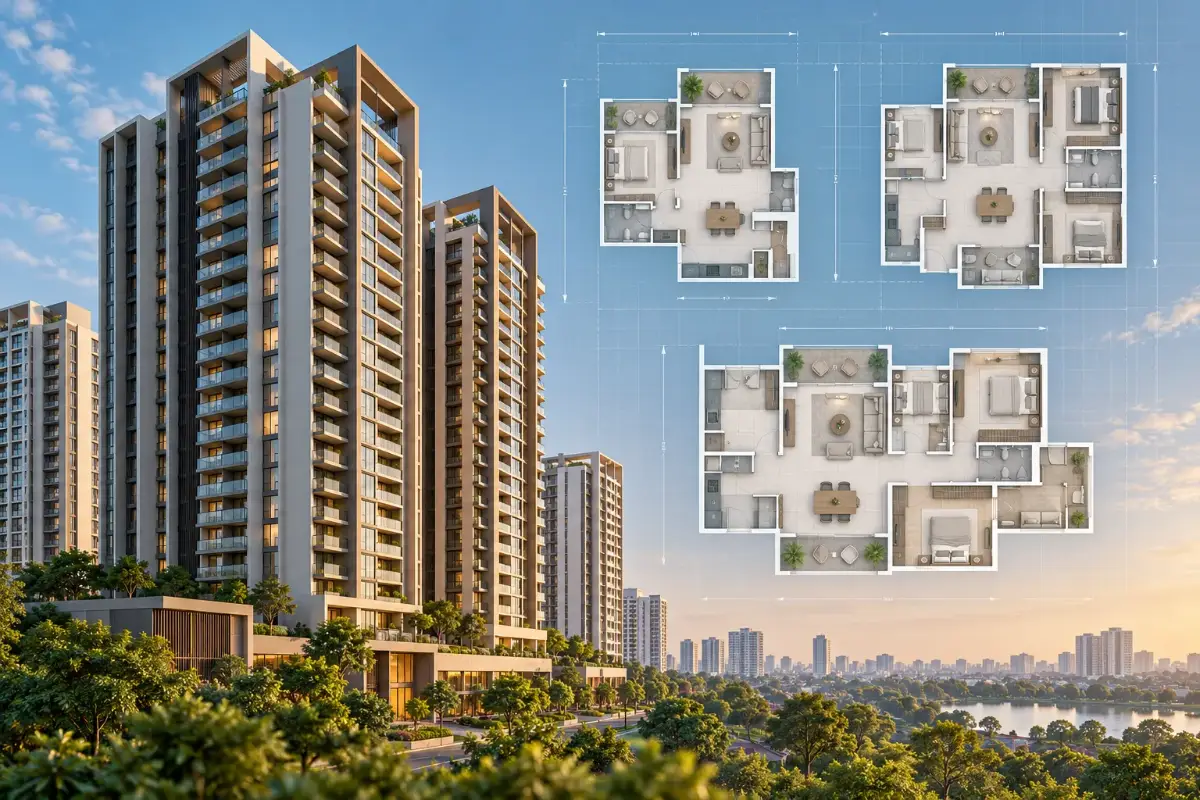
What Is Carpet Area in an Apartment?
Carpet area is the area inside an apartment measured according to the definition provided under the Real Estate (Regulation and Development) Act, 2016.
Under Section 2(k), RERA carpet area includes the net usable floor area and the area occupied by internal partition walls.
It excludes external walls, service shafts, exclusive balcony or verandah areas and exclusive open terraces.
What Is Included in RERA Carpet Area?
The calculation generally covers the apartment’s internal living spaces and the internal partition walls separating them.
These spaces typically include:
Living and dining rooms
Bedrooms
Kitchen
Bathrooms and toilets
Internal passages
Storage spaces within the apartment
Internal partition walls
Although internal partition walls are included in RERA carpet area, the floor directly beneath those walls is not available for placing furniture. That is an important distinction between the legal carpet-area measurement and the open, walkable space a buyer may imagine.
What Is Excluded from Carpet Area?
RERA carpet area does not include external walls, service shafts, exclusive balconies, verandahs or open terraces.
Shared spaces such as elevators, staircases and common corridors are also outside the individual apartment’s carpet area.
When comparing flats, ask for balconies and other exclusive-use spaces to be disclosed separately so you can understand the full layout without confusing those areas with RERA carpet area.
Super Built-Up Area Meaning: What Are You Really Paying For?
The term super built-up area generally refers to an apartment’s built-up area plus a proportionate allocation of common areas within the development.
It is sometimes called saleable area or super area in property advertisements, although the terminology and calculation methods are not always identical between developers.
Imagine buying an apartment in a large residential complex. You have your own living room, bedrooms, kitchen and bathrooms, but the building also has lifts, shared corridors, staircases and entrance areas.
A developer may allocate part of those shared spaces to each apartment when presenting the super built-up area.
What Can Super Built-Up Area Include?
Depending on the project’s method of calculation, it may account for:
The apartment’s built-up area
A share of common corridors
Staircase and lift lobby areas
Certain shared entrance or circulation areas
Other qualifying common spaces allocated by the developer
Not every amenity or common facility is necessarily included. Buyers should request a written area statement explaining the developer’s actual calculation.
Unlike RERA carpet area, super built-up area does not have one universally standardised calculation method under the central RERA definition.
That is why two apartments with the same advertised super built-up area can have different carpet areas.
Built-Up Area vs Carpet Area vs Super Built-Up Area
Before comparing apartments, it helps to understand the third measurement: built-up area.
Carpet Area
The net usable apartment area as legally defined under RERA, including internal partition walls and excluding specified external and exclusive-use spaces.
Built-Up Area
A broader term that generally includes the carpet area and wall-related areas, with balconies or other components sometimes included depending on the stated measurement convention.
Super Built-Up Area
A wider marketed area that typically includes built-up area plus an allocated share of common spaces.
In practical terms, the distinction matters because a developer’s advertised apartment size may not represent the actual usable floor area available inside your home.
Before comparing prices, confirm which measurement each advertisement uses.
How to Calculate Carpet Area in an Apartment
An apartment carpet area calculation should be based on the approved drawings and the applicable RERA definition.
For a simple illustration, suppose an apartment has the following areas:
Living and dining area: 260 sq. ft.
Bedrooms: 330 sq. ft.
Kitchen: 100 sq. ft.
Bathrooms: 90 sq. ft.
Internal passages and storage: 65 sq. ft.
Internal partition walls: 55 sq. ft.
The RERA carpet area in this simplified example would be:
260 + 330 + 100 + 90 + 65 + 55 = 900 sq. ft.
The calculation assumes these areas are mutually exclusive and measured correctly.
An exclusive balcony of 80 sq. ft. would be shown separately rather than included in the 900 sq. ft. RERA carpet area.
Carpet Area Calculation Formula
RERA Carpet Area = Qualifying Net Internal Floor Area + Internal Partition Wall Area
The legally excluded areas must not be added.
For actual property transactions, use the approved area statement rather than estimating measurements from a marketing floor plan.
How Does Loading Factor Affect Apartment Size?
Loading factor is a commonly used industry term for the difference between a marketed super built-up area and the carpet area.
The following is one commonly used calculation convention:
Loading Factor (%) = [(Super Built-Up Area − Carpet Area) ÷ Carpet Area] × 100
For example, imagine an apartment with:
Carpet area: 1,000 sq. ft.
Super built-up area: 1,300 sq. ft.
The difference is 300 sq. ft.
Using the formula above, the loading factor is 30%.
This does not mean that the remaining 300 sq. ft. belongs exclusively to the buyer. It generally represents additional area counted under the marketed measurement.
Some property listings express loading as a percentage of super built-up area instead. Because conventions differ, always ask the developer which formula was used.
Why Carpet Area Matters When Comparing Apartments in Bangalore
When buying a flat in Bangalore, the advertised size is only one part of the decision.
A 2 BHK apartment with a practical layout and higher usable area may feel more comfortable than a larger marketed apartment with awkward passages or inefficient room arrangements.
For example, buyers researching Puravankara projects across Bengaluru can compare the officially disclosed RERA carpet area, apartment layout, room dimensions and overall purchase cost instead of looking only at the advertised square footage.
This approach becomes particularly useful when comparing homes in different residential communities.
What Makes an Apartment Layout More Practical?
Look beyond the total number of square feet.
Check whether the living room can comfortably accommodate your furniture, whether the bedrooms offer usable wall space, and whether the kitchen has enough storage and working area.
Also examine natural light, ventilation, internal circulation, balcony access and the placement of bathrooms.
A thoughtfully arranged home can sometimes offer better everyday usability than a larger apartment with an inefficient layout.
Does Carpet Area Affect the Price of a Flat?
Yes. Carpet area helps buyers understand the effective price of the space they are purchasing.
Consider two hypothetical apartments priced at ₹90 lakh.
Apartment A has a carpet area of 1,000 sq. ft.
Apartment B has a carpet area of 900 sq. ft.
Although both apartments cost the same, Apartment A offers more RERA carpet area.
The effective price per carpet square foot would be:
Apartment A: ₹90,00,000 ÷ 1,000 = ₹9,000 per sq. ft.
Apartment B: ₹90,00,000 ÷ 900 = ₹10,000 per sq. ft.
This comparison makes the difference clearer.
However, carpet-area pricing is not the only factor that determines value. Floor level, location, specifications, developer track record, building quality, amenities and total ownership costs also matter.
Should You Compare Apartments Using Only Super Built-Up Area?
No. A super built-up area comparison alone can be misleading when different properties use different loading conventions.
Ask each seller or developer for the RERA carpet area and compare the effective total purchase price against that figure.
Also review the approved floor plans to understand how effectively the available space is used.
Understanding Apartment Sizes in Balagere and East Bangalore
Residential developments in Balagere, Panathur and neighbouring East Bangalore areas attract buyers who want access to employment corridors around Whitefield, Marathahalli and Outer Ring Road.
When comparing such apartments, usable space becomes particularly important for families planning to work from home or accommodate changing household needs.
For instance, buyers researching Purva Balagere Bangalore can use the carpet-area principles explained here to evaluate advertised configurations and request the approved area details for individual homes.
A 3 BHK description tells you how many bedrooms an apartment offers, but not how large those rooms are or how much practical living space the layout provides.
The same principle applies to newly launched, under-construction and completed apartments throughout Bangalore.
Why RERA Carpet Area Is Important for Homebuyers
The Real Estate (Regulation and Development) Act, 2016 introduced a standard statutory definition of carpet area to improve clarity in apartment transactions.
Under Section 4, promoters registering applicable projects are required to disclose specified project details, including the carpet area of apartments for sale.
This helps buyers understand what is being offered and compare the apartment information in official disclosures.
Where Can You Verify RERA Carpet Area?
For a RERA-registered apartment project in Karnataka, visit the official Karnataka RERA portal and search using the registered project name or registration number.
Review the available apartment information, approved plans and disclosed carpet areas.
Compare these details with the brochure, area statement and agreement for sale.
Official portal: Karnataka RERA
Remember that a project’s marketed name may differ from its registered name. Confirm the correct project identity before relying on the information.
How to Compare Two Flats with Different Advertised Areas
Imagine visiting two 3 BHK apartments in Bangalore.
The first has a marketed area of 1,600 sq. ft. and a disclosed RERA carpet area of 1,120 sq. ft.
The second has a marketed area of 1,500 sq. ft. and a disclosed RERA carpet area of 1,150 sq. ft.
At first glance, the first apartment appears larger because its advertised size is higher.
However, the second actually provides more RERA carpet area.
This is exactly why understanding carpet area vs super built-up area can change the way you compare residential properties.
The most useful approach is to examine the area statement, review the floor plan and calculate the effective price per carpet square foot before selecting an apartment.

What Should You Check Before Booking an Apartment?
Before paying a booking amount, ask the seller or developer to clearly identify all relevant area measurements.
Apartment Area Checklist
- Confirm the RERA carpet area of the selected apartment.
- Request the approved apartment floor plan.
- Check bedroom, kitchen and living-room dimensions.
- Confirm whether balcony and terrace areas are separately disclosed.
- Ask how the advertised built-up or super built-up area was calculated.
- Compare the effective price per carpet square foot.
- Review the complete cost sheet and additional charges.
- Verify the relevant RERA registration and project details.
- Confirm that the agreement for sale uses the correct apartment area.
- Check whether any area-related adjustments or conditions appear in the agreement.
Homebuyers considering Puravankara Panathur or other residential projects in East Bangalore should request approved apartment measurements rather than relying solely on indicative sizes in property advertisements.
A few careful checks at this stage can prevent misunderstandings about the space you are purchasing.
Common Mistakes Buyers Make When Comparing Flat Sizes
Assuming a 1,500 Sq. Ft. Flat Has 1,500 Sq. Ft. of Usable Space
The advertised figure may refer to super built-up or another measurement rather than RERA carpet area.
Comparing Prices Without Checking the Area Basis
A lower advertised price per square foot does not necessarily mean better value if that price is based on a larger super built-up measurement.
Ignoring the Actual Layout
Two apartments with identical carpet areas can have very different usability because of room proportions, circulation, storage and furniture placement.
Treating Balcony Area as Carpet Area
Under the RERA definition, exclusive balcony and verandah areas are excluded from carpet area and should be identified separately.
Assuming All Developers Calculate Super Built-Up Area Identically
Marketing conventions can differ. Always request the exact area statement and calculation basis.
Which Is More Important: Carpet Area or Super Built-Up Area?
For most apartment buyers, RERA carpet area is the more useful starting point because it provides a legally defined measurement of the apartment’s usable internal area, including internal partition walls.
Super built-up area may still provide additional context about how the property was marketed, but it should not replace a proper carpet-area comparison.
When deciding between apartments, combine the carpet area with the floor plan, location, construction quality, amenities and total purchase cost.
The right apartment is not necessarily the one with the highest advertised square footage. It is the one that offers appropriate space, a practical layout and value that makes sense for your needs.
Frequently Asked Questions
What is the main difference between carpet area and super built-up area?
Carpet area is the net usable floor area of an apartment as defined by RERA, including internal partition walls. Super built-up area generally includes the apartment’s built-up area and an allocated share of common spaces. Carpet area is more useful when comparing the usable size of different homes.
How is apartment carpet area calculated?
Apartment carpet area is calculated by measuring the qualifying internal floor spaces and including internal partition wall areas, according to RERA rules. External walls, service shafts, exclusive balconies, verandahs and open terraces are excluded. Buyers should verify the final calculation using approved plans.
Does carpet area include walls?
Yes. RERA carpet area includes internal partition walls within the apartment. It does not include external walls. This is why the legally defined carpet area is not identical to the completely open floor space available for furniture.
Is balcony area included in RERA carpet area?
No. Exclusive balcony and verandah areas are excluded from RERA carpet area. These spaces should be identified separately when comparing apartment dimensions and reviewing the approved layout.
What does super built-up area mean in real estate?
Super built-up area is a commonly used property marketing measurement that generally includes built-up area plus an allocated share of common areas such as corridors, lift lobbies and staircases. The calculation method can vary, so buyers should request a written breakdown.
How much carpet area will I get in a 1,500 sq. ft. apartment?
It depends on whether 1,500 sq. ft. represents carpet, built-up or super built-up area. If the figure is super built-up, the actual RERA carpet area may be lower. The exact amount cannot be determined without the developer’s area statement and approved apartment plans.
What is the loading factor in an apartment?
Loading factor is an industry term used to compare marketed super built-up area with carpet area. One common formula is the difference between the two areas divided by carpet area, multiplied by 100. Calculation conventions vary, so buyers should confirm the basis used.
Which area should buyers use to compare apartment prices?
RERA carpet area is generally the better basis for comparing apartment sizes and calculating the effective price per usable square foot. Buyers should also consider floor plans, balcony areas, location, construction quality and total purchase costs.
Is super built-up area the same as built-up area?
No. Built-up area generally includes carpet area and additional structural or other specified areas. Super built-up area usually adds a share of common spaces. However, the exact definitions used in property advertisements should be confirmed with the developer.
Where can I verify the carpet area of a Bangalore apartment?
For a RERA-registered project, buyers can check the Karnataka RERA portal and review the available registered project disclosures. They should also compare the carpet area stated in the agreement for sale and approved floor plans.
Can two apartments have the same super built-up area but different carpet areas?
Yes. Different loading calculations and apartment layouts can result in two homes having the same marketed super built-up area but different RERA carpet areas. Comparing the official carpet area provides a clearer picture of their relative sizes.
Is RERA carpet area more reliable than advertised super built-up area?
RERA carpet area follows a statutory definition, making it more consistent for comparing apartments. Super built-up area may be presented using developer-specific conventions. Buyers should rely on official disclosures and approved documents rather than only on advertised sizes.
Conclusion
Understanding carpet area vs super built-up area helps homebuyers make more informed decisions when comparing apartments in Bangalore.
Carpet area explains the legally defined usable space within an apartment, while super built-up area generally includes additional common-area allocations under a developer’s chosen measurement method.
Before purchasing a flat, ask for the official carpet area, review the approved floor plan and understand how the advertised apartment size has been calculated.
A careful apartment carpet area calculation can help you compare properties more fairly, understand the effective price of usable space and avoid confusion during the buying process.
Whether you are exploring developments such as Fortune Primero Seven in Sarjapur or Puravankara Codename Futura in Panathur, comparing the disclosed carpet area, floor plans and total purchase cost can help you evaluate different apartment options.
Ultimately, choosing the right apartment is not just about the advertised square footage. It is about finding a home with practical living space, a suitable layout and lasting value for your needs.
Related blogs

How to Choose a Well-Ventilated Apartment | Natural Light & Floor Plan
How to Choose a Well-Ventilated Apartment: Natural Light & Smart...
Read More
2 BHK Flats in Balagere, Bangalore | Puravankara
2 BHK Flats in Balagere, Bangalore – Explore 3 BHK...
Read More
High-Rise Apartments in Panathur | Puravankara Codename Futura
High-Rise Apartments in Panathur: Modern Living at Puravankara Codename Futura...
Read More
Apartments Near Puravankara Panathur | East Bangalore
Apartments Near Puravankara Panathur: A Complete Guide for Homebuyers in...
Read More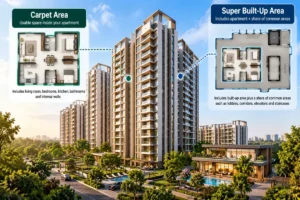
Carpet Area vs Super Built-Up Area: Key Differences
Carpet Area vs Super Built-Up Area: Key Differences Every Homebuyer...
Read More
Documents to Check Before Buying a Flat in Bangalore
Documents to Check Before Buying a Flat in Bangalore: Complete...
Read More
2 BHK vs 3 BHK Apartments in Bangalore | Which Is Best?
2 BHK vs 3 BHK Apartments in Bangalore: Which Is...
Read More
Balagere Apartment Buying Guide | 2, 3 & 4 BHK Homes
Balagere Apartment Buying Guide: Choosing the Right Home for Your...
Read More
New Flats in Balagere Bangalore | Upcoming Apartments
New Flats in Balagere Bangalore: A Practical Guide to Upcoming...
Read More